
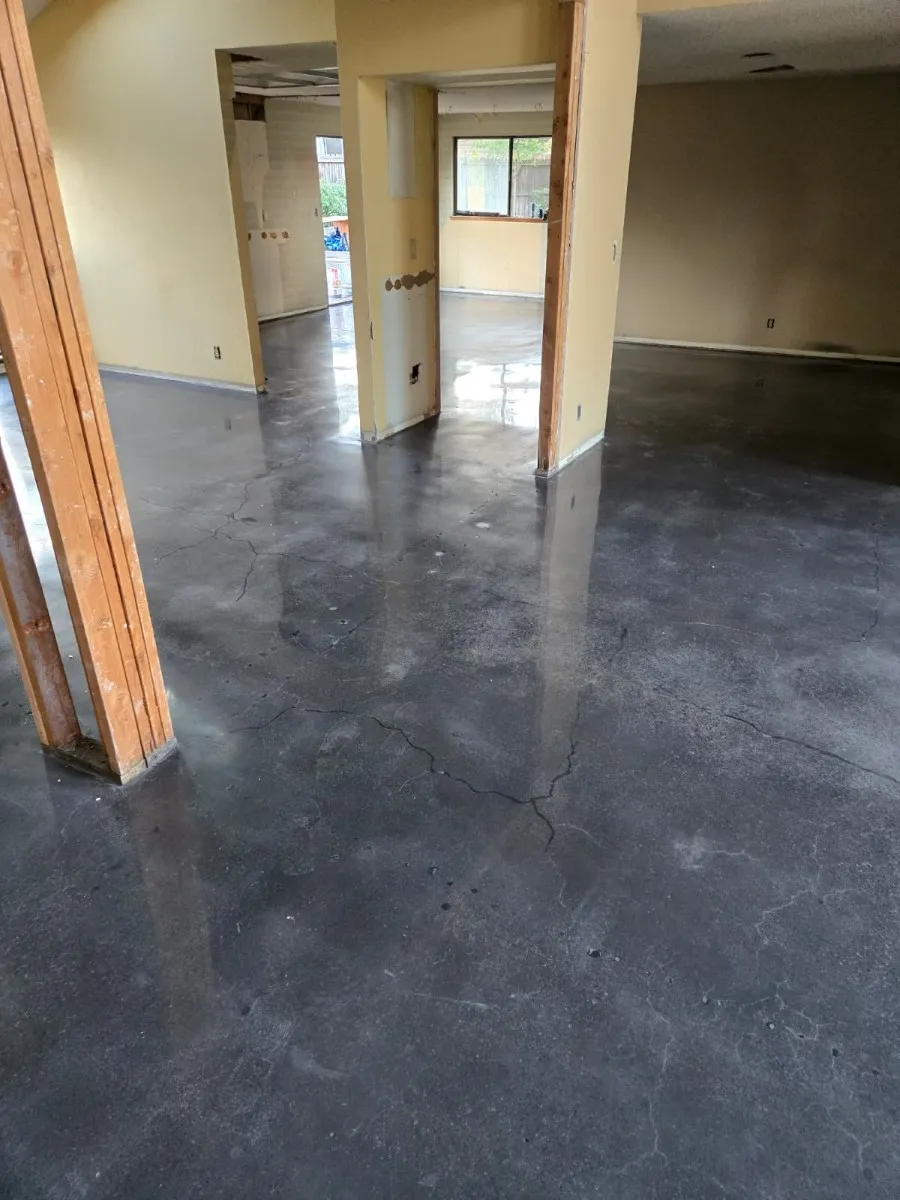
An existing concrete slab can support very different finished looks, even when its basic structure remains unchanged. A retail owner might want reflective floors, while a homeowner may prefer subdued texture in a basement or hallway. Planning a black polished concrete floor raises questions about color and sheen, but the wider decision is whether polishing, honing, or a grind-and-seal treatment suits the room. Understanding these techniques prevents an attractive sample from becoming an impractical choice after everyday traffic begins.
Begin With the Way the Space Operates
A showroom sees continuous foot traffic and occasional moving displays. A family basement faces different demands, including furniture legs, pets, and cleaning routines. Before choosing a finish, list what will happen on the surface and how often.
Consider daylight, wet shoes, cleaning equipment, and whether chairs or carts will move across the floor. These observations clarify whether reflection, traction, appearance, or straightforward upkeep should take priority.
Mechanical Polishing Changes the Concrete Itself
True mechanical polishing uses progressively finer diamond abrasives to refine the slab. The desired gloss and aggregate exposure influence the sequence, and a densifier may be used to harden the surface and reduce dusting. The final appearance still depends on the original concrete mixture and its condition.
Unlike a coating, polishing does not conceal every previous repair or stain. An old patch may become more noticeable after grinding. Ask for a small test section when appearance matters, especially in converted buildings.
Honed and Grind-and-Seal Finishes Differ
Honing generally produces a lower-sheen surface through mechanical refinement, while grind-and-seal involves grinding followed by a compatible topical sealer. Both may suit particular spaces, but they should not be advertised as identical systems. The presence of a topical finish changes maintenance and renewal considerations.
For a hallway where glare is undesirable, a restrained appearance may be preferable to mirror-like reflectivity. In other areas, a sealer might provide a particular decorative look. Compare samples and understand how each finish performs with water, spills, and regular cleaning.
Ask Questions Before Approving a Specification
A clear proposal should identify the finishing method, preparation work, and expected surface characteristics. Drawings or a photograph cannot establish whether the slab will polish uniformly. Discuss joints, visible aggregate, previous patching, and any areas where moisture has caused concern.
Use this short checklist during the consultation:
-
What aggregate exposure is achievable on this slab?
-
Which sheen level suits the lighting and traffic?
-
Will repairs or old stains remain visible?
-
What traction is appropriate for the intended use?
-
Does the protective treatment require later renewal?
Keep written answers for reference.
Match Contractors to the Intended Method
A professional epoxy flooring company may also offer concrete polishing, but the application methods are different. Epoxy builds a resin layer over prepared concrete; mechanical polishing refines the substrate. Ask which approach is actually proposed rather than assuming the same crew and equipment serve every finish.
Request information on grinding stages, joint treatments, dust control, and scheduling. The contractor should explain what can be achieved on the existing slab and when the area may return to use. An informed comparison includes long-term care, not just installation price.
Plan Around Construction and Furniture
Concrete grinding creates noise and dust that require appropriate controls. Renovation teams should coordinate finishing with painting, cabinetry, and other sensitive work. Protecting newly finished concrete against adhesive tape, dragged equipment, and spills is especially important during the remaining construction stages.
Owners should also confirm accessibility while the area is being worked on. A small commercial property may need alternate customer routes, while a household could require temporary access to laundry or storage rooms. These details help keep the project manageable.
Maintain the Finish Without Guesswork
Remove abrasive grit regularly and clean spills promptly using products approved for the chosen finish. Some topical sealers need periodic evaluation or renewal, while mechanically polished floors may require professional maintenance to restore sheen in heavy-traffic areas.
Furniture pads and entrance mats can reduce concentrated wear. Keep the contractor’s instructions with property records so future cleaners know which products to use. A modest routine is often more effective than occasional aggressive cleaning that damages the surface.
Conclusion
Choosing a concrete finish means understanding both the existing slab and the space it serves. Polishing, honing, and grind-and-seal systems create different appearances and upkeep obligations; none is automatically best for every property. Reviewing samples, specifications, and maintenance plans supports more practical decisions. Homeowners and businesses around Bend and Central Oregon can explore available concrete finishing services through uniquecoatingsandpolishing.com when planning an appropriate upgrade.