
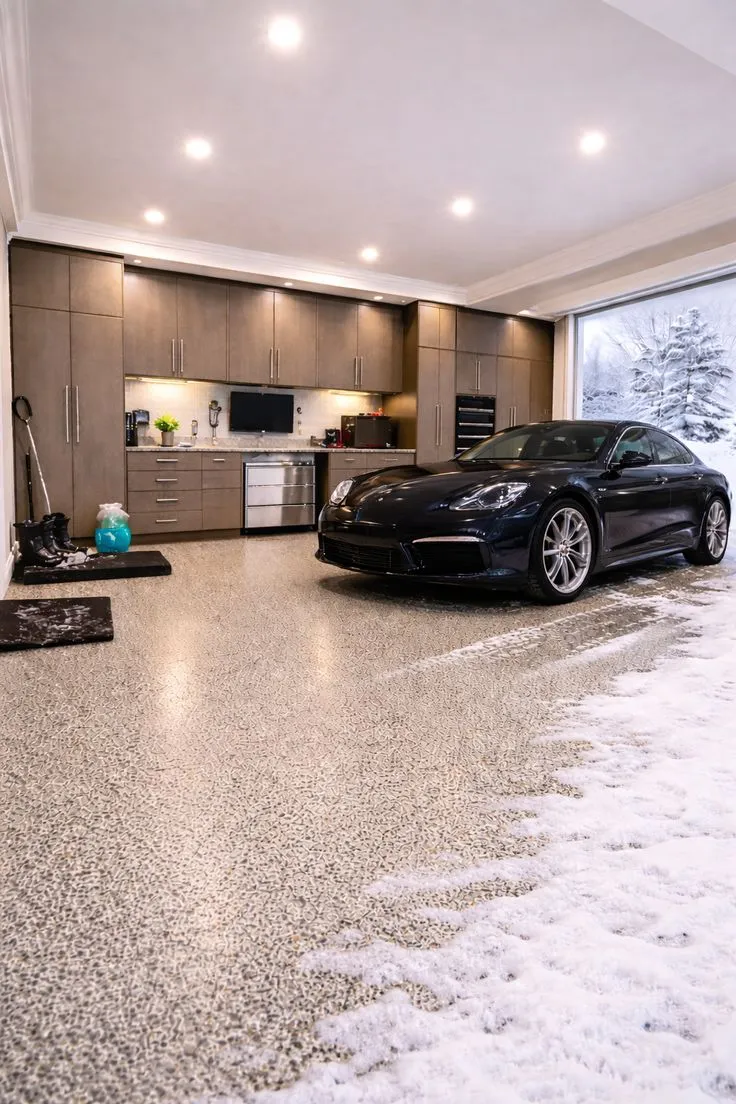
A Southern Ontario garage rarely stays dry and spotless throughout winter. Cars bring in melting snow, road salt, grit, and water, leaving bare concrete stained and difficult to clean. A suitable garage floor coating can help protect prepared concrete while making seasonal upkeep less demanding. However, not every finish responds equally to traffic, moisture, or temperature changes. Homeowners should examine how their garages function before selecting materials, colours, and installation dates. A little planning can make the renovation more practical beyond its first winter.
Follow the Route of Winter Mess
Most winter debris enters beneath vehicle tyres and along the paths people use to reach the house. Slush may gather near garage doors, while salt residue accumulates around parking spaces. Observing these patterns identifies the areas requiring frequent attention.
A protective finish can make routine cleaning easier, but it cannot repair faulty exterior drainage. Check door seals, slopes, and persistent puddles before ordering a coating. Water entering from outside needs its own solution. This distinction matters when repeated freeze-thaw cycles make existing cracks and drainage problems more noticeable.
Choose Colour for Everyday Visibility
A very dark solid colour can look striking in photographs yet show pale salt deposits and fine dust. Light colours may reveal tyre marks instead. Mid-tone blends offer an alternative worth comparing under actual garage lighting.
Decorative chips can create visual variation without overwhelming the room. Consider walls, storage cabinets, and the amount of daylight entering the room. Ask to examine samples rather than trusting screen colours, which can differ noticeably from installed finishes. Viewing samples beside the actual cabinets and walls also reveals whether a pattern feels too busy.
Understand the Flake System
Professional flake epoxy flooring incorporates decorative vinyl chips into a compatible resin coating system. The flakes create a textured, patterned appearance, while an appropriate protective topcoat completes the finish. Actual traction depends on the final surface specification.
Unlike loose garage mats, a bonded resin finish depends heavily on concrete preparation. The material system must match expected tyre traffic, cleaning chemicals, and moisture conditions. Decorative flakes do not automatically make every floor slip-proof. Ask how the topcoat and any traction additive will behave when the surface is wet.
Discuss the Installation Plan
Before the installers arrive, clear the garage and identify items that must remain accessible elsewhere. Vehicles will need temporary parking, and homeowners should account for preparation, repairs, coating application, and curing rather than counting application hours alone.
A useful checklist includes:
-
Confirming repairs to cracks and damaged joints.
-
Asking about grinding and moisture assessment.
-
Reviewing colours and finished surface texture.
-
Planning alternative parking and storage.
-
Checking safe return-to-service instructions.
Discuss possible hidden conditions before agreeing on a schedule. Old paint or unexpected moisture can create extra work that a visual quote may not reveal.
Prepare for Ontario Temperature Changes
Concrete temperature affects coating application, even when indoor air feels comfortable. Garages without consistent heating may present different conditions during late autumn or early spring. Product specifications should determine acceptable installation temperatures and curing arrangements.
Avoid assuming that a surface is ready for vehicle tyres simply because it feels dry. The contractor should explain the required wait time for foot traffic, storage, and parking. Following those instructions helps protect the newly installed system.
Plan Cleaning Around Actual Use
During winter, sweep away grit before it gets dragged across the surface. Remove salt residue and spills with cleaners approved for the installed coating. Strong solvents and abrasive scrubbers may damage some protective finishes.
Keep a suitable mat or tool near the entrance to limit debris moving into the house. Inspect turning areas and the section beneath parked vehicles periodically. Regular upkeep remains important even when the coating is designed for easy cleaning. Keep the manufacturer’s care instructions available so different family members use compatible products.
Consider the Garage’s Other Roles
Many garages hold bicycles, sports equipment, garden tools, and seasonal storage alongside a vehicle. Flooring selection should account for these activities as well as parking. A workshop may need more attention to surface traction and dropped tools.
Wall-mounted storage can reduce clutter and make washing the floor simpler. Leave access to drains, utilities, and garage door mechanisms. A thoughtful layout helps the upgraded floor remain useful throughout the year.
Conclusion
A winter-ready garage needs more than an attractive colour. Understanding where slush collects, choosing a suitable texture, and preparing concrete properly can support a durable, manageable surface. Careful scheduling and regular cleaning are still essential after installation. Homeowners around Toronto and Southern Ontario can explore garage and decorative coating services through quickfxepoxy.ca when planning a floor upgrade suited to seasonal vehicle use.