
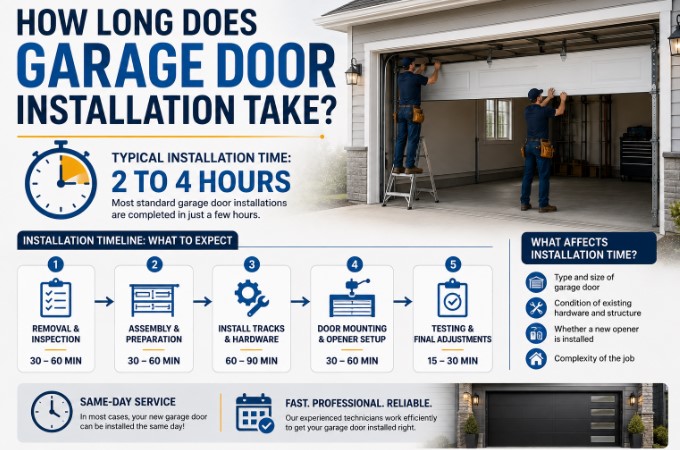
Are you thinking about upgrading that old, creaky garage door? If so, you probably want to know how much time to block out on your calendar. Nobody wants a massive gap in the front of their house left wide open overnight. Luckily, if you pass the job off to an experienced local crew, they can usually knock it out in about 4 to 6 hours.
It is basically a quick morning or afternoon project. Still, every house has its own structural quirks, meaning a few different details can easily drag things out or speed them up.
Key Takeaways
- Plan for roughly 4 to 6 hours if you are just doing a standard door replacement.
- Lightweight steel setups fly together but heavy wood designs can take nearly double the time.
- Swapping your motorized opener simultaneously typically tacks on 1 to 2 extra hours.
- You can save the crew a ton of time by moving your junk out of the workspace early.
- Trying to tackle this yourself over the weekend usually turns into a multi-day headache.
Time Taken to Install a Garage Door
When you book a local garage door company, they will generally aim to get your new system up and running in a single visit. For most normal suburban homes, you are looking at a total time commitment of four to six hours. During this block of time, the installers have to do some serious heavy lifting. First, they carefully take down the old panels. Then, they run the new metal tracks along your walls, stack the fresh panels into place and wind up the high-tension springs.
If your garage floor is perfectly flat and the old wooden framing is solid, a couple of fast technicians might even beat that estimate and head out early. But if you went with a high-end custom setup with lots of special decorative hardware, they will probably need the full day. It really hinges on what kind of door you bought and how much prep work your walls need before the new tracks can go up safely.
Factors Affecting How Much Time Installation Takes
No two garages are built exactly the same way. Crews run into unique layout issues at almost every single driveway they pull into. Here are the main things that can alter your timeline:
The Type of Door You Choose
The specific material and mechanical design of your new door dictate a lot of the time. Different styles require completely different amounts of assembly steps, care and muscle.
- Standard Steel Doors: These are lightweight and easy to lift. Because they are so simple, they usually take a fast 4 to 6 hours.
- Roll-Up Doors: Since they don’t use long horizontal ceiling tracks, a crew can often install them in a speedy 3 to 4 hours.
- Custom Wood Doors: Real wood weighs a ton and scratches easily. The guys have to move incredibly slowly, which pushes the time to 6 or 10 hours.
- Insulated Glass Doors: Lifting fragile glass sections requires extreme patience, usually stretching the setup to about 6 or 8 hours.
The Size of the Door
A single-car garage door is small, light and very easy to manage. On the flip side, a giant double door built for a two-car garage is a whole different story. Bigger doors require extra structural tracking, much thicker springs and double the hardware which naturally adds quite a bit of time.
Removing the Old Door
Unless you are building a brand-new detached garage from scratch, the workers have to tear down your existing door before they can do anything else. Unhooking rusted hinges, taking apart old bent panels and safely releasing the tension on old springs adds an hour or two of heavy labor.
Fixing Rotted Framing Wood
If you live in an older home, the wooden framing around your garage opening might be soft from moisture or sagging from age. You can’t mount a straight, smooth-gliding door onto a crooked wood frame. A professional garage door company near me will have to stop and rebuild that wood structure first so everything is square before the new tracks can even be mounted.
Installing a New Opener
If you decide to keep your old, working garage door opener, the team can just clip it onto the new door and run a quick test. But if you are upgrading to a modern, quiet smart opener, mounting the motor box, leveling the center rail and running the safety sensor wires adds 1 to 2 hours.
Clearing Out Garage Clutter
Garage door installers need a lot of physical room to work safely. They have to set up tall ladders, lay out long metal rails and carry wide panels around without tripping. If your space is packed to the ceiling with lawnmowers, bikes and storage bins, it slows the whole process down.
Dealing with Low Ceilings
Some basements or older parking spots have very low ceilings or giant support beams right in the way of the tracks. Working around these tight spaces requires specialized low-headroom hardware and tons of extra measuring which can stretch out the day.
Weather Problems
A light drizzle won’t stop a professional crew since they do most of the technical assembly inside the garage itself. However, severe thunderstorms or high winds change things. Wind can catch a massive door panel like a sail, making it way too dangerous to carry outside until the storm passes.
The Number of Installers
A single technician working completely by himself will obviously take much longer to finish the job than a coordinated team from a dedicated garage door service company that handles these specific setups every single day of the week.
Conclusion
Upgrading your home’s garage door is a fast, high-impact project that rarely takes more than a single morning or afternoon. While heavy custom woods or a warped garage frame can add some extra hours to the schedule, a local pro can usually get the job done in under six hours. Just make sure to sweep out some workspace and move your vehicles out into the street before the truck arrives so the guys can work safely and efficiently.
Frequently Asked Questions
Can I save time by using my old tracks with the new door?
No, do not do this. Even if your old tracks look fine, new doors are engineered to pair with their own specific tracking systems. Forcing a new door onto old tracks causes friction, jams and premature wear, plus it almost always voids your manufacturer’s warranty.
How much space do the installers actually need to work?
Try to clear out your stuff at least ten feet back from the garage opening inside. This gives the workers plenty of room to move around safely with heavy tools, set up their ladders and stack the new panels without banging into your personal belongings.
Is a garage door installation loud?
Yes, expect a decent amount of noise for a few hours. The crew will be running power drills, hammering metal tracks and clanging old steel parts into their truck. If you work from home, you might want to take your phone calls in a back room or find a quiet coffee shop for the morning.
How do I find a reliable local expert?
Check online reviews in your neighborhood, ask around for recommendations and make sure whoever you hire is fully licensed and insured. A trustworthy business will always be happy to give you a clear, honest price estimate on paper before they ever start drilling holes in your walls.